 Polski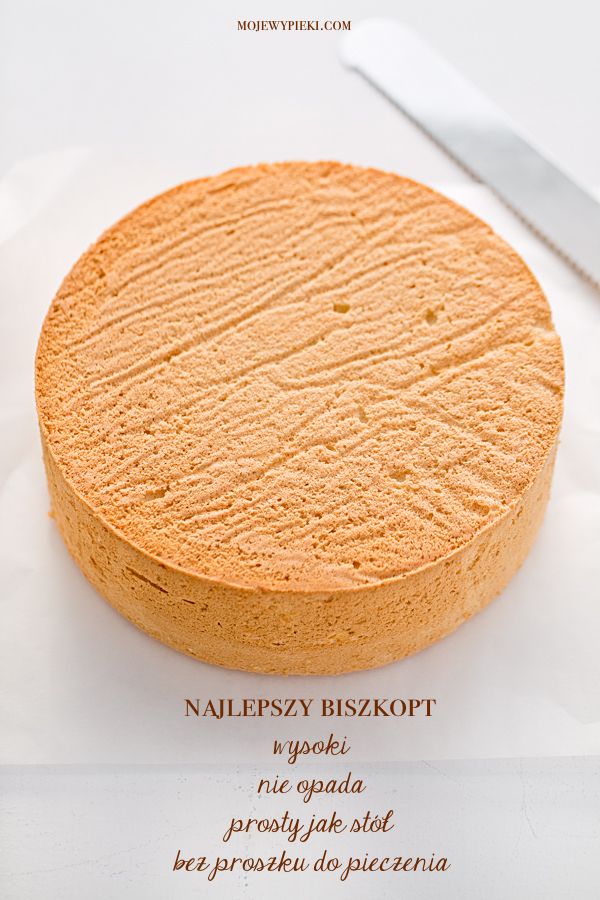
This is my favourite recipe for a classic sponge cake. It contains no baking powder and does not sink after baking. The sponge cake rises solely thanks to properly whipped eggs and the careful folding of flour into the mixture. The recipe comes from my good friend Ania, who insisted that after baking the cake should be dropped from a height of about 30 cm onto the floor. It took a lot of convincing, but she was right—the sponge really does stay beautifully tall and level. It has worked for me every single time. Perfect for celebration cakes, layer cakes and many other desserts.
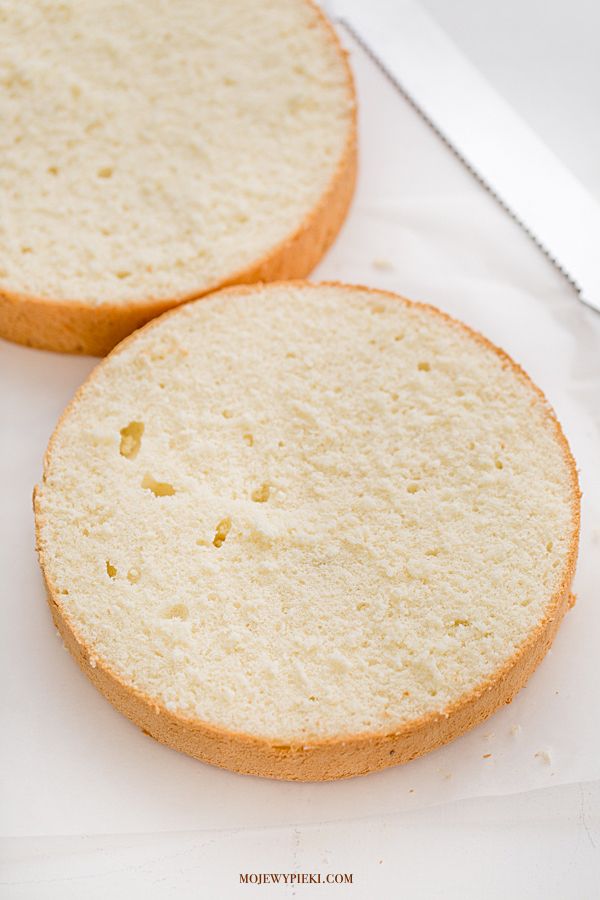
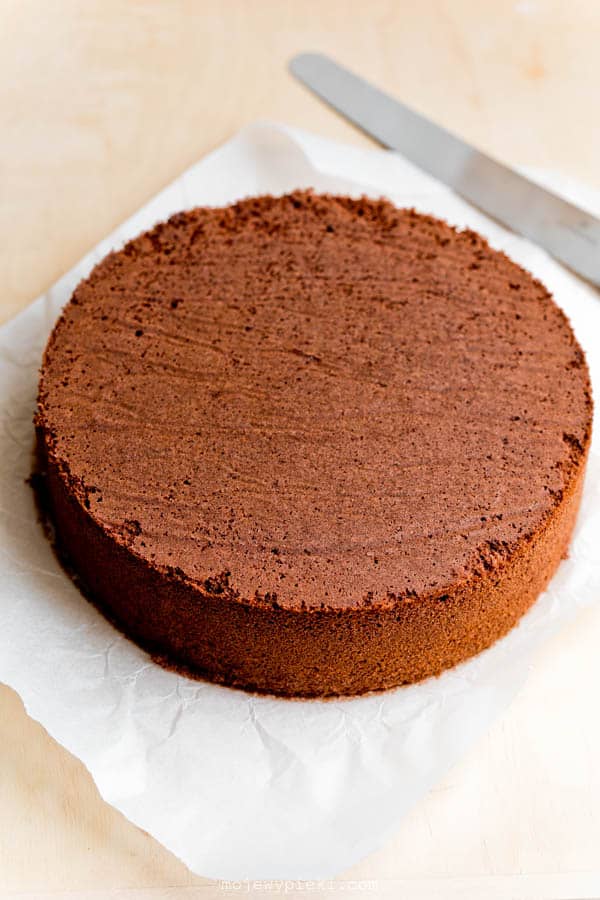
A sponge baked in a 23 cm cake tin reaches approximately 7 cm in height (as shown in the photos, using a deep tin). In a standard 25 cm cake tin that is 5 cm deep, the sponge rises right to the top of the tin and reaches approximately 5 cm in height.
Ingredients for the classic sponge cake:
- 5 large eggs
- 165 g caster sugar
- 115 g cake flour or plain flour
- 45 g potato starch (or cornflour)
All ingredients should be at room temperature.
Separate the egg whites from the yolks. Whisk the egg whites until stiff peaks form, taking care not to overwhip them. Overwhipped whites will appear curdled and form clumps. Gradually add the sugar, one tablespoon at a time, whisking well after each addition. Add the egg yolks one at a time, continuing to whisk until fully incorporated. Sift the flour and potato starch directly over the whipped egg mixture. Using a spatula (preferred) or a balloon whisk, gently fold the dry ingredients into the mixture until just combined. Using a spatula produces the lightest and fluffiest sponge. Do not use an electric mixer at this stage.
Line the base of a 23 cm or 25 cm round cake tin with baking parchment. Do not grease the sides. Carefully transfer the batter into the tin and level the surface gently.
Bake at 170°C for approximately 35–40 minutes, or until a skewer inserted into the centre comes out clean. Immediately after removing the sponge from the oven, drop the tin from a height of approximately 30 cm onto the floor or worktop. Then leave the sponge to cool completely at room temperature.
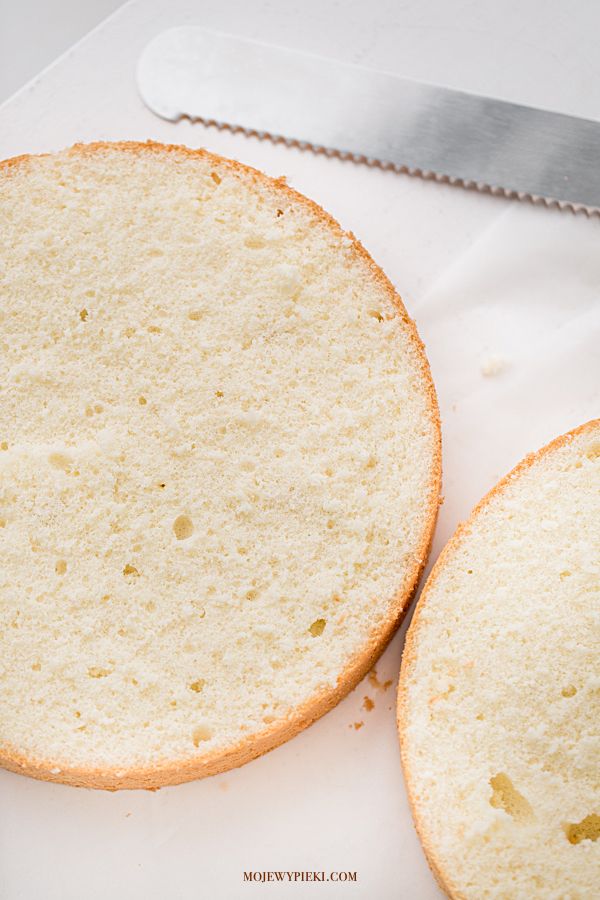
Once cooled, run a knife around the edges to release it from the tin. Slice horizontally into three cake layers using a long serrated knife.
Alternative method:
Recently, I have often prepared this sponge by whisking the whole eggs together with all of the sugar at once, without separating the eggs. This method takes a little longer, but there is no risk of overwhipping the egg whites. It is also simpler, especially when using a stand mixer. Once the eggs are properly whipped, continue with the recipe exactly as described above.
Why didn’t my sponge cake rise?
If your sponge failed to rise or sank after baking, check the following: Were all ingredients measured accurately? Did you use the correct flour? Were the egg whites whipped properly without being overwhipped? Did you fold the flour in gently enough? Did you avoid using a mixer when combining the flour with the eggs? Because this sponge contains no baking powder, its success depends entirely on properly whipped eggs and careful folding.
Enjoy!

I read all comments, but unfortunately I can't answer them all. Before posting a question, make sure nobody has asked a similar one (this will be facilitated by the search engine included in the comments). Comments with links may not be published.
Blog author