 Polski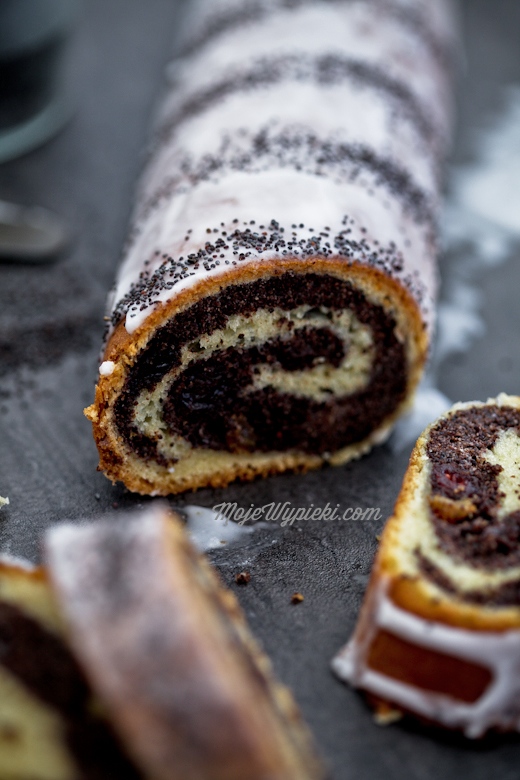
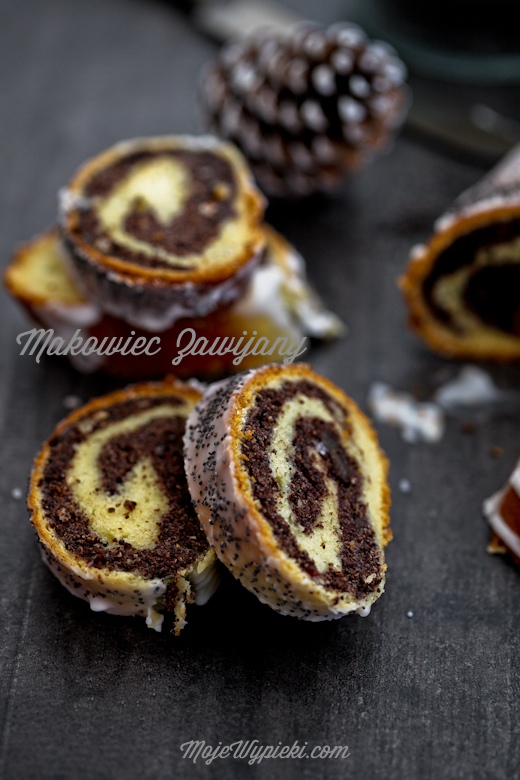
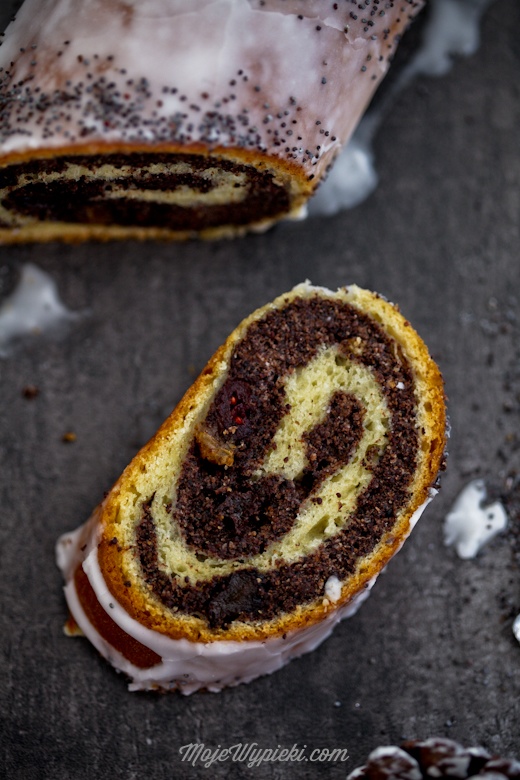
An exceptionally delicious rolled poppy seed cake – truly the best recipe! Moist, soft, and staying fresh for days, it’s far better than anything you’ll find in a bakery. It has never failed me – this is my signature bake. This recipe makes 3 generous cake rolls (about 35 cm each). The dough is wonderfully soft, with a beautifully baked crust. I bake it every Christmas, it’s become a tradition. Highly recommended!
Makes 3 cake rolls.
Ingredients for the yeast dough:
- 450 g strong white bread flour + extra for dusting
- 180 ml lukewarm milk
- 150 g butter, melted and cooled
- 6 egg yolks (from large eggs)
- 45 g fresh yeast or 21 g dried yeast*
- 6 tablespoons sugar
- 1/2 teaspoon salt
- 1½ tablespoons neutral spirit (vodka, rum, or almond liqueur)
- seeds from 1 vanilla pod or 1 teaspoon vanilla paste
All ingredients should be at room temperature.
Mix the flour with dried yeast (if using fresh yeast, prepare a starter first). Add the remaining ingredients and knead, adding the melted butter towards the end. Knead thoroughly until the dough is soft and elastic. Place in a lightly floured bowl, cover, and leave to rise in a warm place for about 1.5 hours, until doubled in size.
Ingredients for the poppy seed filling:
- 500 g poppy seeds
- 170 g light brown sugar (you can replace half with honey for extra moisture)
- 100 g raisins or sultanas
- 50 g walnuts, chopped
- 3 tablespoons runny honey
- 2 teaspoons almond extract
- 1 teaspoon ground cinnamon
- 1 tablespoon butter
- 1/2 cup candied orange peel
- 6 egg whites (from large eggs)
All ingredients should be at room temperature.
Pour boiling water over the poppy seeds (just enough to cover them), leave to cool, then drain off any excess water and grind twice using a fine meat grinder. Alternatively, you can cover the poppy seeds with boiling water, simmer for 20 minutes, then drain thoroughly, cool, and grind twice. You can also use ready-ground poppy seeds, which are widely available in shops – this is very convenient, as there’s no need for grinding. Simply cover with boiling water, leave to cool, and then squeeze out any excess moisture thoroughly, for example using a clean linen tea towel.
Mix the ground poppy seeds with all remaining ingredients except the egg whites. Just before assembling the rolls, whisk the egg whites until stiff peaks form and gently fold into the mixture.
Divide the yeast dough into 3 portions. Roll each into a rectangle about 3 mm thick (lightly dusting with flour). Spread the poppy seed filling evenly, leaving about 2 cm at the edges. Roll up tightly (like a Swiss roll), tucking the ends underneath. Place each roll onto oiled baking paper and wrap it twice, leaving about 1 cm of space for the dough to expand. It’s not essential to let the shaped rolls rise again, but you can leave them in a warm place for 15 minutes if desired. Arrange the three rolls on a large baking tray, leaving plenty of space between them.
Bake at 190°C for about 30–40 minutes, until golden brown (the colour will show clearly through the paper). Remove from the oven, carefully cut open the paper along the top, and allow to cool slightly.
While still warm, drizzle the rolls with icing and sprinkle with extra poppy seeds or decorate as desired.
Ingredients for the icing:
- 1 cup icing sugar
- 3 – 4 tablespoons hot water
Place the icing sugar in a bowl and mix with the hot water using the back of a spoon until smooth. Adjust the consistency as needed – add a little more water if too thick, or more icing sugar if too runny. If needed, make an additional batch.
For bread machine users:
Place all dough ingredients into the bread machine in the following order: liquids first, then dry ingredients, and yeast last. Select the dough programme. Once finished, remove the dough, knead briefly, and continue with the recipe as above.
Storage:
This poppy seed roll keeps fresh for a long time. You can bake it up to 2 days before Christmas and store it in a cool place, covered with a tea towel. I usually bake it last, as I enjoy yeast cakes fresh.
It also freezes very well – wrap tightly in cling film and freeze. To defrost, leave at room temperature for about 2 hours before serving. Ice only after fully thawed (freezing can affect the icing).
*This is quite a traditional recipe – older methods used more yeast. Nowadays, I reduce the fresh yeast to 30 g or dried yeast to 14 g (2 sachets).
Enjoy!
I read all comments, but unfortunately I can't answer them all. Before posting a question, make sure nobody has asked a similar one (this will be facilitated by the search engine included in the comments). Comments with links may not be published.
Blog author