 Polski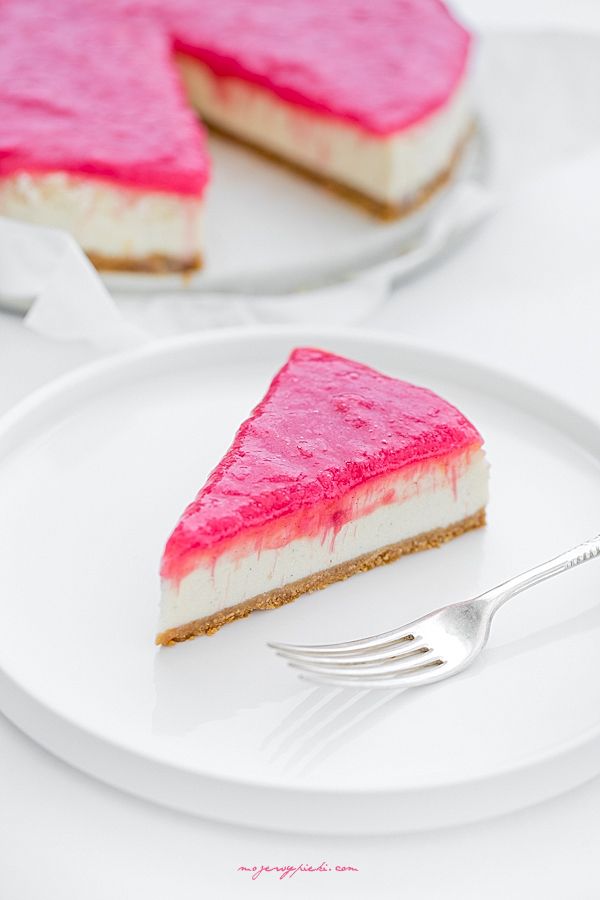
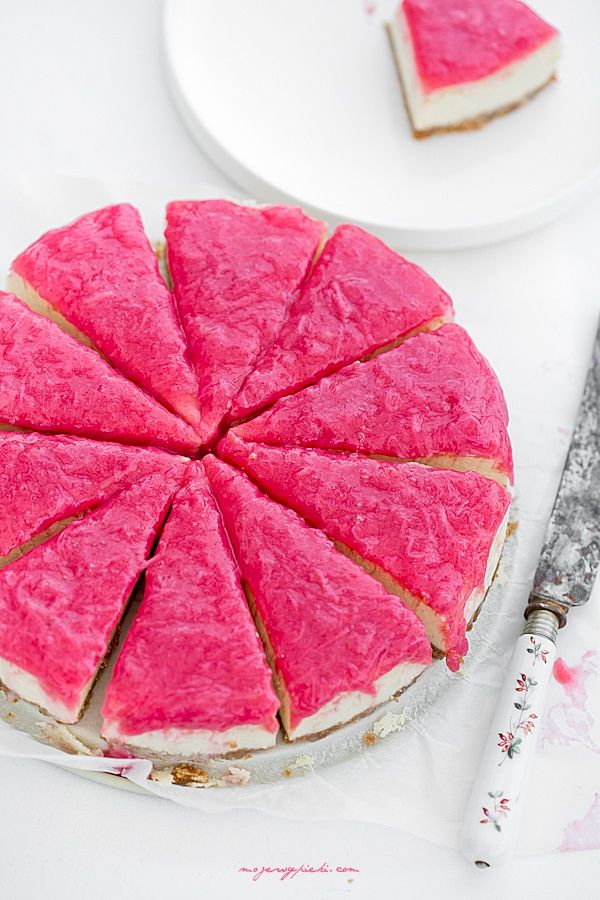
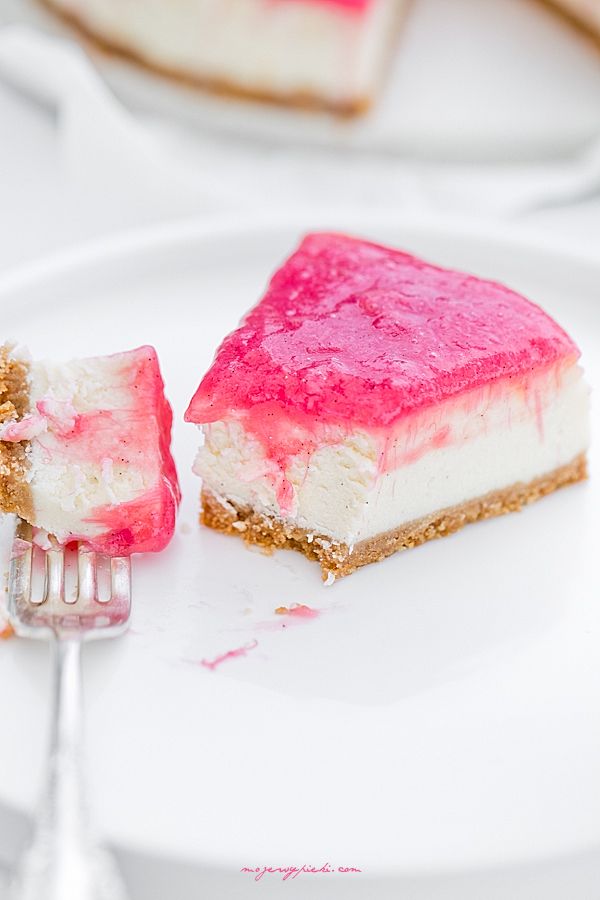
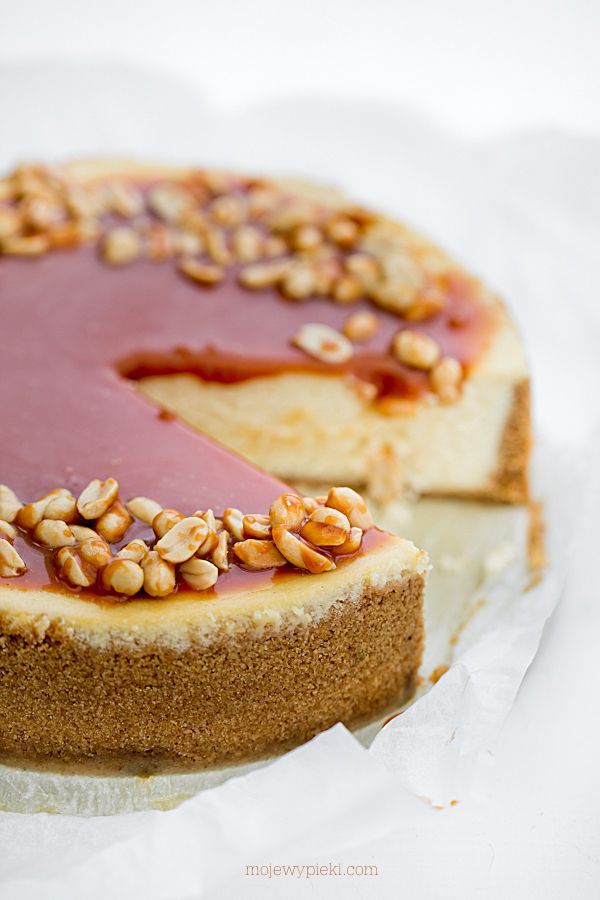
Forced rhubarb, with its beautiful pink stalks, appears in shops as early as January, long before rhubarb starts growing in garden patches. In the UK, the largest rhubarb-growing region is Yorkshire, where forced rhubarb is famously grown in darkness and harvested by candlelight. This type of rhubarb is more delicate and sweeter than traditional rhubarb, and its stunning colour makes it perfect for desserts and baking. If you cannot find forced rhubarb, choose the reddest stalks available and save the greener ones for compote. For this wonderfully pink, candy-coloured rhubarb, I baked a vanilla cheesecake. Topped with a layer of pink rhubarb, it looks as though it has been covered with a rosy duvet—and as for the flavour, it is absolutely delicious!
Ingredients for the base:
- 160 g oat or wholemeal biscuits
- 30 g butter, melted
Place the biscuits and melted butter into a food processor and blend until the mixture resembles wet sand. If you do not have a food processor, place the biscuits in a sturdy food bag and crush them thoroughly with a rolling pin before mixing with the melted butter.
Line the base of a 23 cm springform tin with baking parchment. Do not grease the sides. Press the biscuit mixture firmly into the base of the tin and level the surface.
Bake at 175°C for approximately 10 minutes, or until lightly golden. Remove from the oven and leave to cool slightly while preparing the filling.
Wrap the outside of the tin twice with aluminium foil, as the cheesecake will be baked in a water bath.
Ingredients for the vanilla cheesecake filling:
- 500 g semi-fat or full-fat curd cheese (twaróg), ground three times
- 250 ml sour cream
- 3 large eggs
- ½–⅔ cup caster sugar
- 1 tablespoon potato starch
- 1 tablespoon plain flour
- 1 teaspoon vanilla extract, vanilla bean paste or 8 g vanilla sugar
All ingredients should be at room temperature. Place all the filling ingredients into the bowl of a stand mixer. Mix only until combined. Do not overmix, as incorporating too much air will cause the cheesecake to rise excessively and then sink during cooling. Ideally, the baked cheesecake should remain perfectly level. Pour the filling onto the prepared biscuit base.
Bake in a water bath at 160°C for approximately 50 minutes. The cheesecake is ready when the surface is set and slightly springy to the touch. Remove the cheesecake from the water bath and leave to cool completely at room temperature. Refrigerate overnight to allow the texture to set properly.
Ingredients for the pink rhubarb topping:
- 250 g pink forced rhubarb (or the reddest parts of regular rhubarb stalks)
- 2 tablespoons sugar
- 1 teaspoon vanilla bean paste or seeds from 1 vanilla pod
- 1 teaspoon (3 g) powdered gelatine
- 15 ml cold water
Sprinkle the gelatine over the cold water, stir and leave for 10 minutes to bloom.
Cut the rhubarb into small pieces (do not peel the stalks). Place it into a saucepan with the sugar, vanilla and 1 tablespoon of water. Cook gently over low heat, uncovered, for approximately 10 minutes, stirring frequently, until the rhubarb has completely softened and broken down. If necessary, add another tablespoon of water. Remove from the heat. Add the bloomed gelatine and stir until fully dissolved. Leave to cool to room temperature.
Spread the rhubarb topping evenly over the chilled cheesecake and smooth the surface. Refrigerate until fully set.
What is a water bath?
A water bath involves placing the cheesecake tin inside a larger baking dish or roasting tin and filling the outer dish with boiling water until it reaches halfway up the sides of the cheesecake tin. The steam created during baking provides a humid environment, allowing the cheesecake to bake evenly throughout, including the centre. This method helps prevent cracking and produces an exceptionally smooth and creamy texture.
Enjoy!
I read all comments, but unfortunately I can't answer them all. Before posting a question, make sure nobody has asked a similar one (this will be facilitated by the search engine included in the comments). Comments with links may not be published.
Blog author