 Polski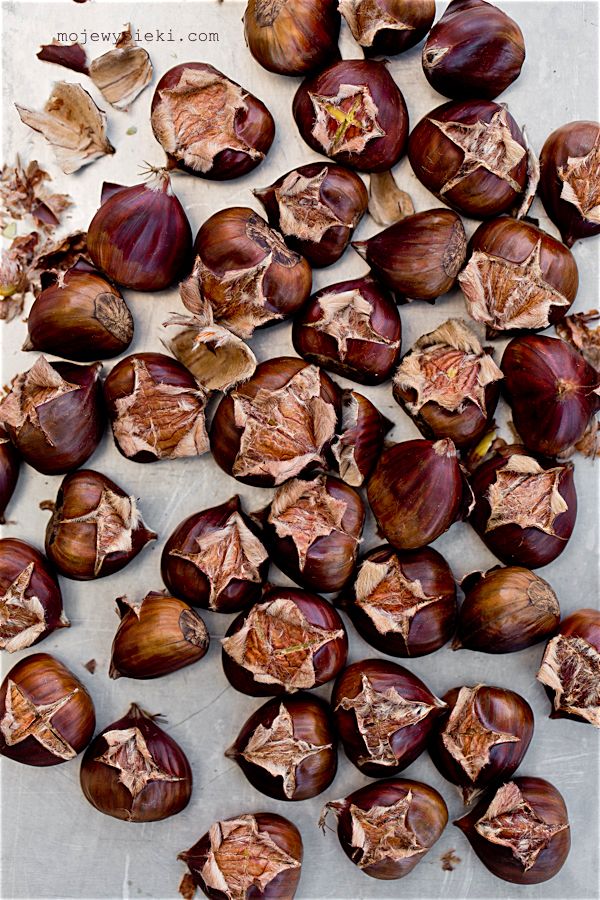
The first edible chestnuts have already appeared, so it’s worth knowing how to prepare them and what to do with them – and of course, we’ll be focusing on the sweeter side of baking. You may remember roasted chestnuts being sold on street corners, and they truly taste best during the colder months. We have fond memories of enjoying them as a snack after winter trips to the ice rink with the children. Fresh chestnuts must always be cooked or roasted before eating and should never be eaten raw. So how do you prepare them at home? Nothing could be easier!
Choose chestnuts that are firm, heavy for their size and free from any signs of mould. Once roasted, they develop a sweet flavour and a texture somewhat similar to sweet roasted potatoes, with a delicate nutty note. They make an excellent addition to savoury dishes, while chestnut purée, sweet chestnut paste and chestnut cream are widely used in cakes and desserts, which I hope will finally make an appearance on the blog this autumn and winter.
Ingredients for roasted chestnuts:
- edible chestnuts
- a generous pinch of salt
Using a sharp serrated knife, score each chestnut on the rounded side, making a cross-shaped incision.
Place the chestnuts in a saucepan and cover with cold water. Add a generous pinch of salt. Bring to the boil over medium heat. Once boiling, drain immediately while still hot. Spread the chestnuts onto a baking tray in a single layer.
Roast at 200–220°C for approximately 18–25 minutes, or until deeply golden and well roasted. Remove from the oven and serve hot. They are easiest to peel while still warm.
Enjoy!

I read all comments, but unfortunately I can't answer them all. Before posting a question, make sure nobody has asked a similar one (this will be facilitated by the search engine included in the comments). Comments with links may not be published.
Blog author