 Polski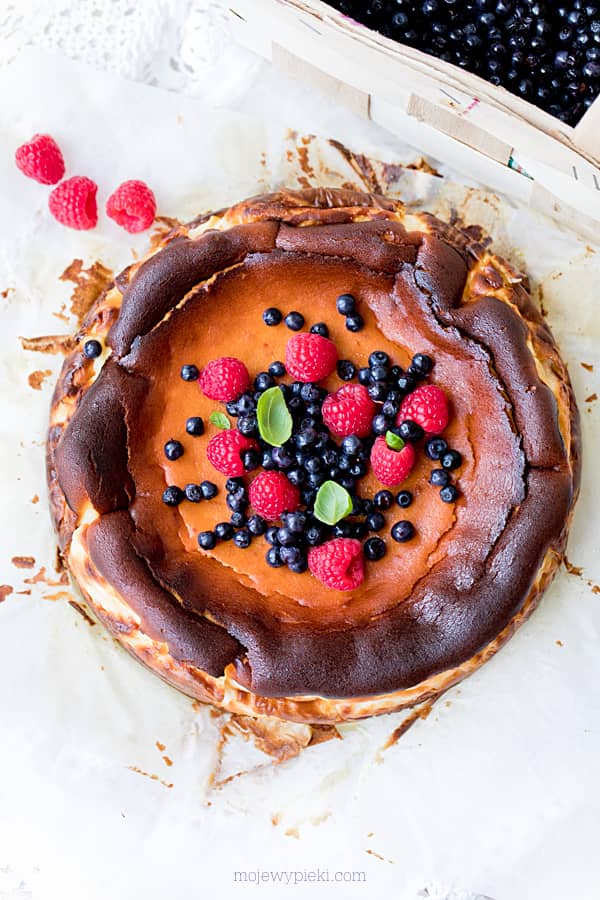
Basque cheesecake is the famous Spanish cheesecake from San Sebastián’s legendary La Viña restaurant. Many consider it the best cheesecake in Spain – and it turns out perfectly every time.
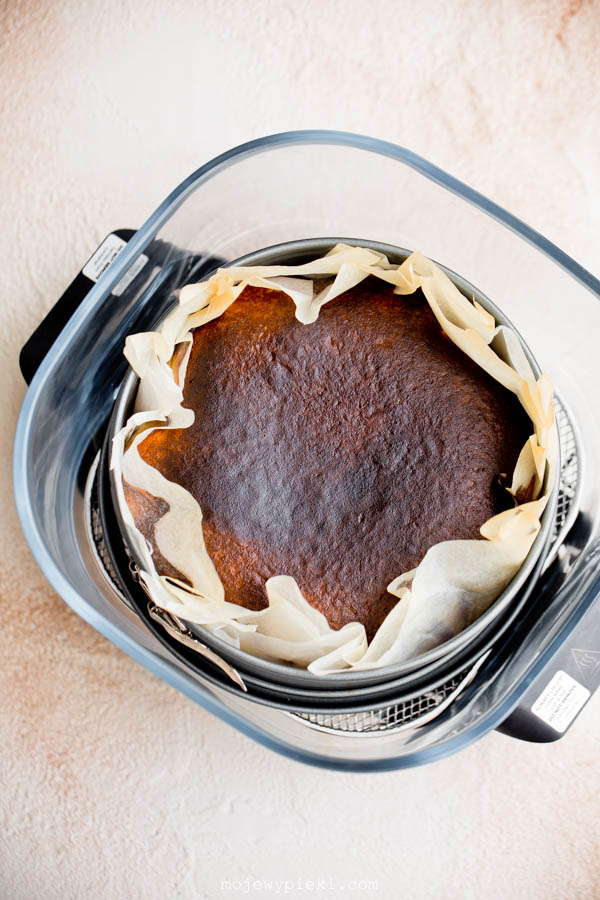
Forget, for a moment, the snow-white perfection of a classic New York cheesecake. Basque cheesecake is its complete opposite, yet it has captured the admiration of dessert lovers around the world. Its appeal lies in its extraordinary flavour and texture. Baked at a high temperature, it develops a deeply caramelised brown top with subtle toffee notes. And unlike many cheesecakes, it doesn’t need a biscuit base. In fact, it looks as though it may have spent a little too long in the oven. As it cools, the centre sinks and cracks, while the sides retain the characteristic folds left by the baking paper. But isn’t that exactly where its charm lies? It is unpretentious, rustic and wonderfully homemade.
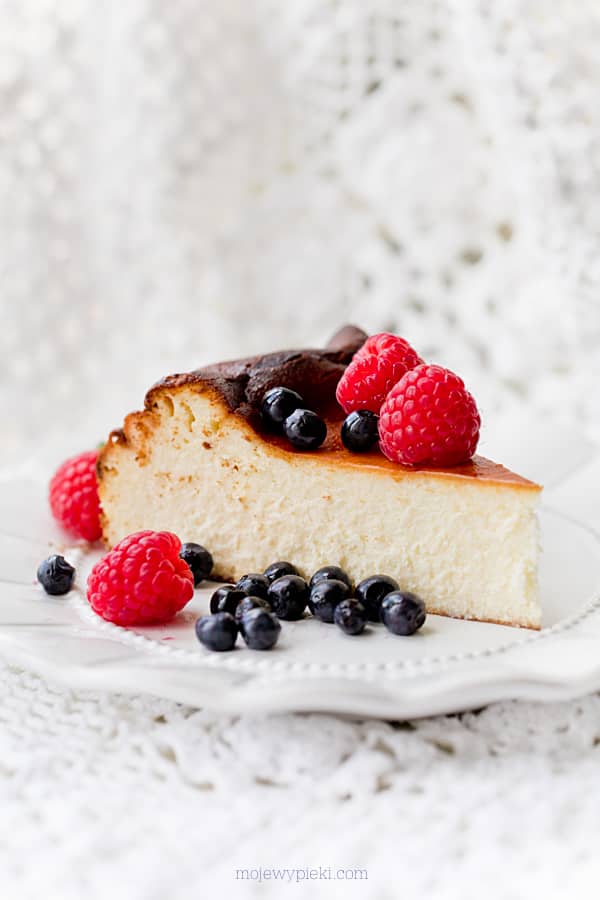
Basque cheesecake requires very little effort and no water bath. It is remarkably easy to make and almost impossible to get wrong. Its texture is somewhere between a Japanese cheesecake and a cloud-like soufflé cheesecake, though lighter than the latter. Most of all, it is incredibly creamy – with that much cream, it simply has to be. Try it once and you’ll be baking it again.
Ingredients for Basque cheesecake:
- 900 g full-fat cream cheese, Philadelphia-style*
- 300 g caster sugar
- seeds from 1 vanilla pod or 16 g vanillin sugar
- 6 large eggs
- 500 ml double cream
- a pinch of salt
- 50 g (⅓ cup) plain flour
All ingredients should be at room temperature.
Line a 25 cm springform tin (or a deep 23 cm cake tin) with baking paper. Butter the tin first, then line it so that the baking paper extends at least 5 cm above the rim of the tin.
Place the cream cheese and sugar into the bowl of a stand mixer. Beat until smooth and the sugar has dissolved. Add the vanilla, eggs and salt. Mix until the cheesecake mixture is completely smooth. Pour in the double cream and mix until combined. Sift the plain flour directly into the cheesecake mixture and mix briefly until incorporated. The batter should be smooth and pourable rather than thick. Pour the cheesecake batter into the prepared tin.
Bake at 200°C for approximately 50–60 minutes**. The top (or at least the edges) should be deeply browned, while the centre should still have a noticeable wobble when the tin is gently shaken. Remove from the oven and leave to cool completely. The cheesecake will rise dramatically during baking and then sink slightly as it cools, leaving higher edges around the outside.
Refrigerate for at least 8 hours before serving. This resting time is essential for the cheesecake to develop its proper texture and become easy to slice.
Basque cheesecake can be kept at room temperature for short periods, but for longer storage or during warm weather it should be refrigerated.
*I often make this cheesecake using a mixture of Polish curd cheese and Philadelphia-style cream cheese in equal proportions. This is our favourite version.
** Some recipes suggest baking the cheesecake for only 40 minutes for an even creamier centre, removing it from the oven while it still wobbles significantly in the middle. The shorter the baking time, the creamier the cheesecake will be. Traditionally, the very centre has an almost custard-like consistency, which makes it difficult to slice neatly. Take care not to underbake it, however. The cheesecake should not remain runny after chilling. A shorter baking time will also result in less browning on top. If desired, place the cheesecake under a hot grill for 30 seconds to 1 minute, watching carefully, or switch to fan-assisted heat for the final minutes of baking. Personally, I could bake this cheesecake slightly less, but this version is exactly how we enjoy it.
Enjoy!
I read all comments, but unfortunately I can't answer them all. Before posting a question, make sure nobody has asked a similar one (this will be facilitated by the search engine included in the comments). Comments with links may not be published.
Blog author