 Polski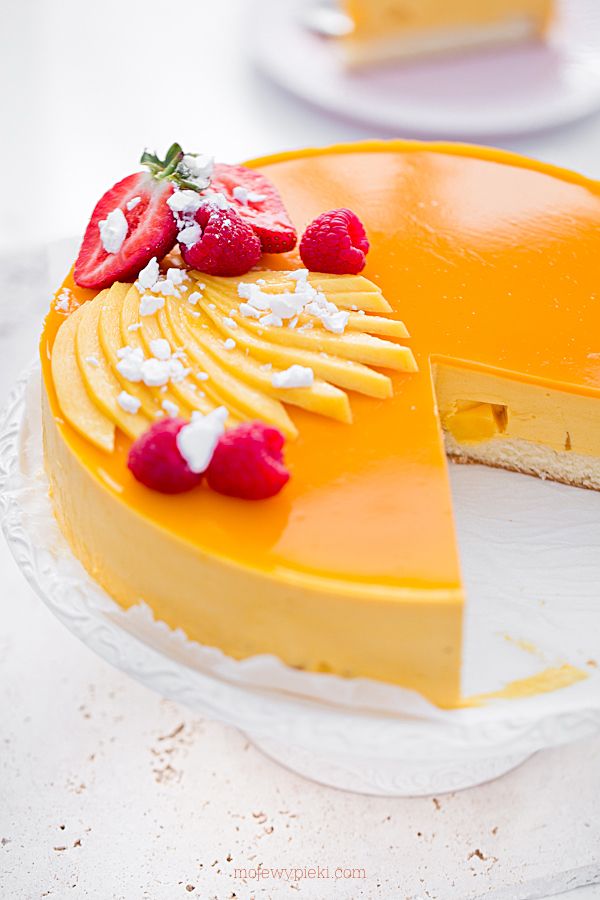
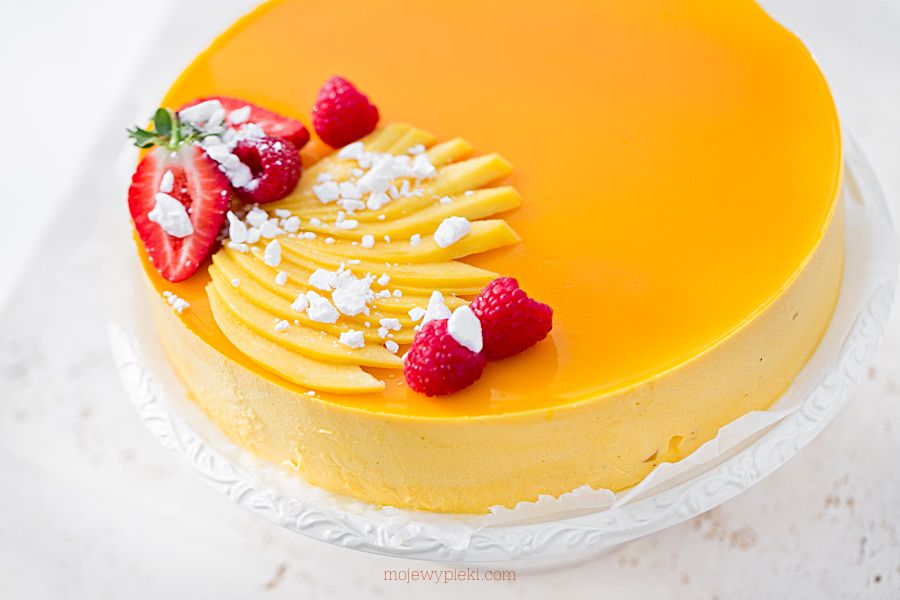
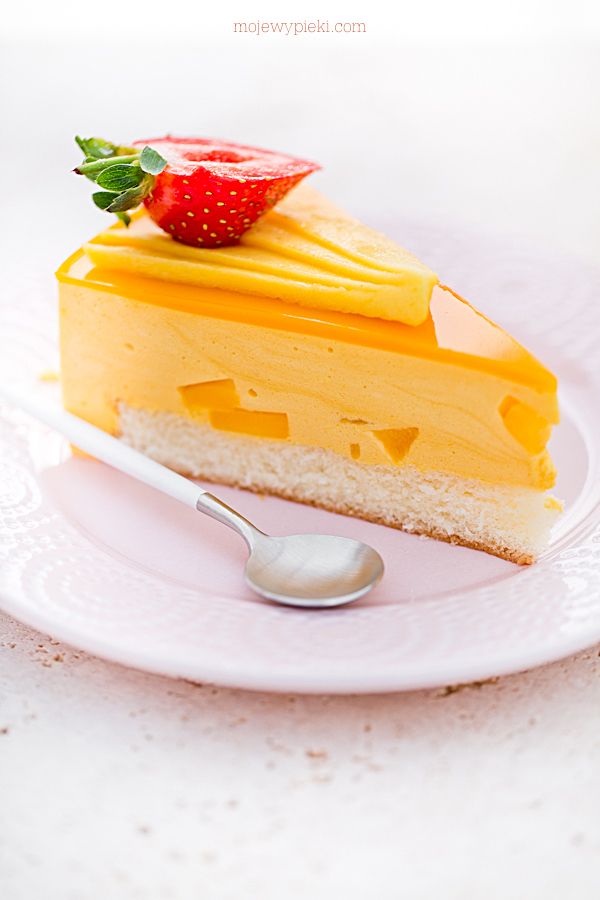
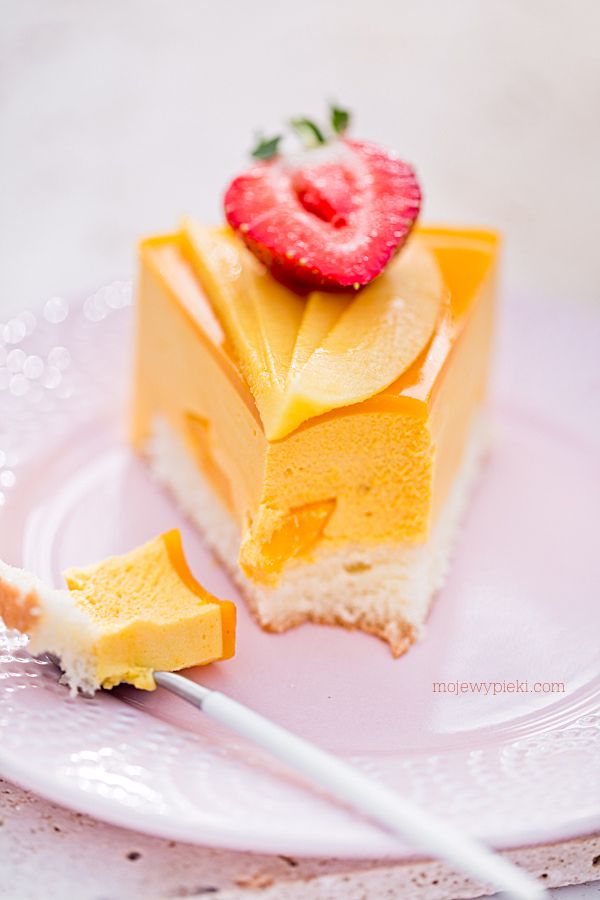
A fresh and vibrant mango mousse cake topped with a glossy mango glaze. It tastes like a million dollars ;), looks as though it came straight from the finest pâtisserie, yet it’s surprisingly simple to make at home. The cake is made up of a single layer of sponge, a silky mango mousse filled with pieces of fresh mango, and a simple fruit decoration on top of the glaze. It’s the perfect dessert for an elegant dinner party or simply to impress family and friends at afternoon tea.
For this recipe, you will need one sponge layer only. The remaining sponge layers can be frozen for future use.
Ingredients for the sponge cake:
- 5 large eggs
- ¾ cup caster sugar
- ¾ cup plain flour
- ¼ cup potato starch
All ingredients should be at room temperature.
Separate the egg whites from the yolks. Whisk the egg whites until stiff peaks form, taking care not to overwhip them. Gradually add the sugar, one tablespoon at a time, whisking well after each addition. Add the egg yolks one at a time, continuing to whisk. Sift the flour and potato starch directly into the egg mixture. Using a spatula or balloon whisk, gently fold the dry ingredients into the mixture until just combined. Do not use a mixer at this stage, as folding by hand helps preserve the airiness of the sponge. Line the base of a 23 cm springform tin with baking parchment. Do not grease the sides. Transfer the batter to the tin and level the surface.
Bake at 160–170°C for approximately 35–40 minutes, or until a skewer inserted into the centre comes out clean. Immediately after removing the cake from the oven, drop the tin from a height of approximately 30 cm onto a work surface or floor. Leave to cool completely at room temperature.
Once cooled, slice horizontally into three layers. Only one layer is needed for this recipe.
Note: Run a knife around the edge of the sponge only after it has completely cooled.
Ingredients for the syrup:
- 50 ml lemon liqueur
- 20 ml water
Mix together.
Ingredients for the mango mousse:
- 600 g mango pulp or mango purée* (approximately 2 large mangoes)
- 100 g Greek yoghurt
- 2 tablespoons lemon juice
- 20 g powdered gelatine
- 300 ml double cream, chilled
- 1 tablespoon icing sugar
Additionally:
- 1 small mango, peeled and diced
If using fresh mangoes, peel and stone them, then weigh out exactly 600 g of flesh. Blend until completely smooth. However, ready-made mango pulp or purée is highly recommended for consistency and flavour.*
Meanwhile, sprinkle the gelatine over a few tablespoons of cold water, just enough to cover it, and leave to bloom for 10 minutes.
Place the mango purée into a saucepan. Add the lemon juice and heat until almost boiling. Remove from the heat and stir in the bloomed gelatine until fully dissolved. Leave to cool to room temperature. Add the Greek yoghurt and mix thoroughly. Whip the chilled double cream with the icing sugar until stiff peaks form. Fold the mango mixture into the whipped cream in three additions, mixing gently until combined and evenly coloured, with no visible white streaks remaining. Fold in the diced mango.
Prepare a 25 cm springform tin. Place the 23 cm sponge layer in the centre of the tin. Lightly brush with the syrup using a teaspoon. Pour the mango mousse over and around the sponge layer, smoothing the surface evenly. Chill until completely set.
Ingredients for the mango glaze:
- 150 g mango pulp or mango purée*
- 1 teaspoon powdered gelatine
Sprinkle the gelatine over approximately 3 tablespoons of cold water and leave to bloom for 10 minutes. Heat the mango purée until almost boiling. Remove from the heat and stir in the gelatine until completely dissolved. Leave to cool to room temperature.
Pour the glaze over the set mango mousse and spread evenly. Return to the refrigerator until the glaze has fully set.
Once fully chilled, carefully run a knife around the edge of the tin and release the cake. Transfer to a serving plate and decorate as desired with fresh fruit. Slice and serve. Store in the refrigerator.
Enjoy!
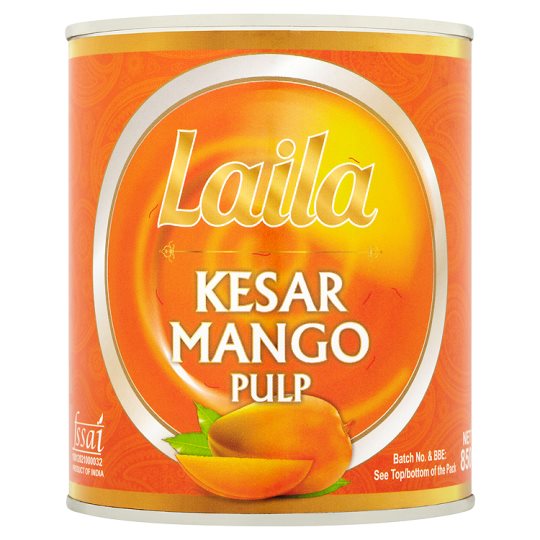
* For this cake, I used a ready-made mango pulp exactly like this:


I read all comments, but unfortunately I can't answer them all. Before posting a question, make sure nobody has asked a similar one (this will be facilitated by the search engine included in the comments). Comments with links may not be published.
Blog author