 Polski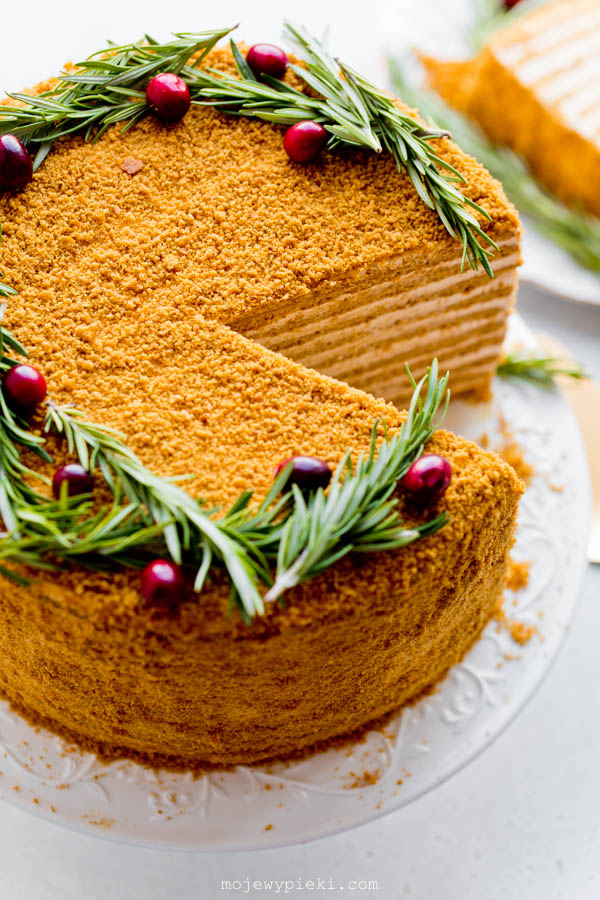
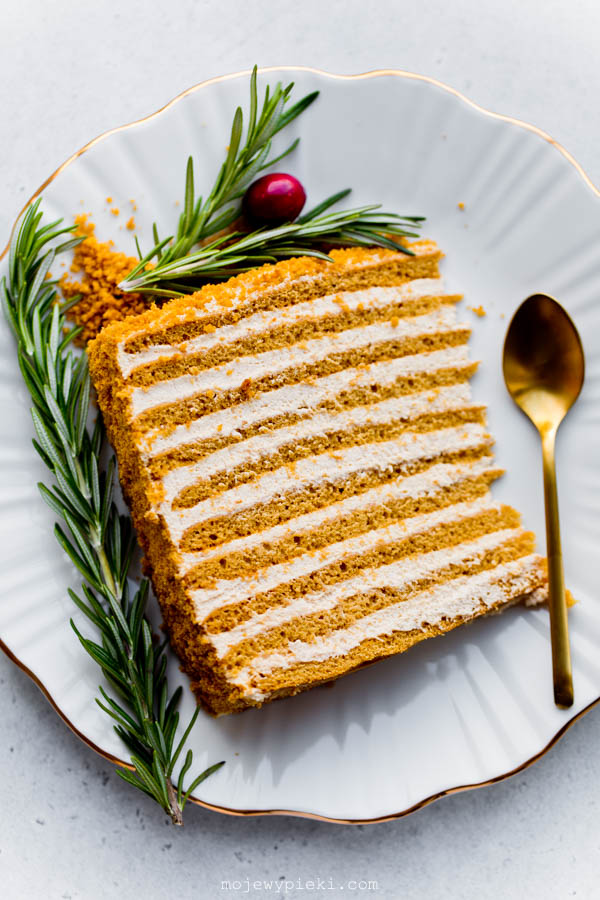
Miodownik (Medovik) is a very popular Russian honey cake, traditionally baked during the Christmas season and made up of multiple layers of honey cake sandwiched with a light and delicious dulce de leche cream. Russian Medovik consists of many individual layers of honey cake, each baked separately. You may prefer to fill it with a custard buttercream, a sour cream and double cream filling or a semolina cream. You could even spread plum butter over some of the layers. There are as many versions of Medovik as there are households, but every one is simply delicious. This cake melts in the mouth, with an intensely honeyed, caramel-like flavour and, in this version, it does not require several days of resting. It will be ready just a few hours after assembling the layers with the cream, although it becomes even softer and more melt-in-the-mouth with each passing day. It does require a little time, patience and effort, I admit, but the result is absolutely worth it. Highly recommended for the festive season!
This Medovik recipe comes from 20th Century Cafe in San Francisco, owned by Michelle Polzine. She brought the recipe to the United States after her culinary travels around Europe, probably never expecting this honey cake to become such a hit. This is not a shortcrust pastry enriched with honey, which you roll out in the traditional way, but a loose honey batter that is spread directly onto baking paper before baking. And there is honey – lots of honey! Not only in the baked layers, but in the cream as well. It is a beautiful, delicious and impressive cake – or rather, layer cake – whose flavour you will remember for a long time, and a recipe you will want to return to every Christmas.
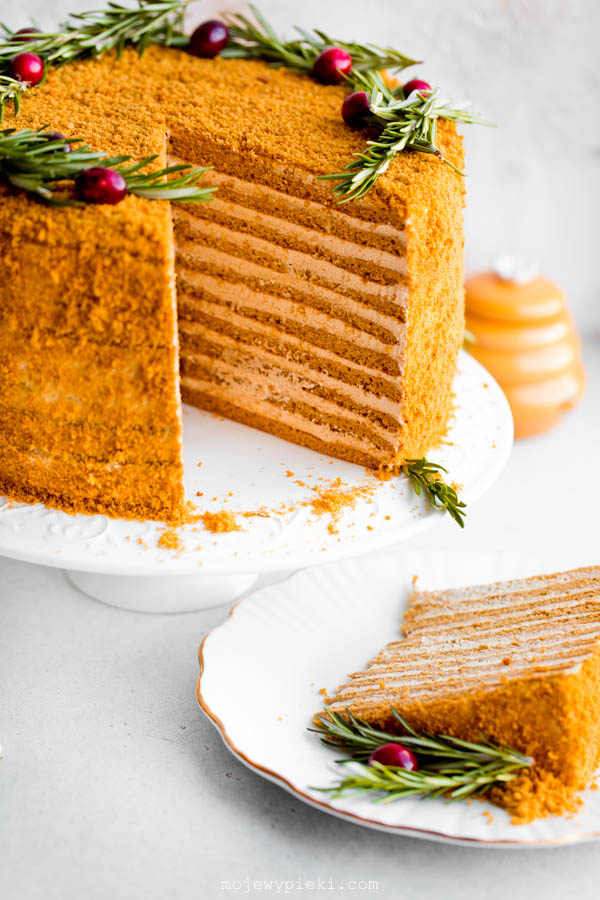
Makes one Medovik consisting of 10 honey cake layers (+ 1 additional layer for crumbs), sandwiched with cream and approximately 13 cm high.
Ingredients for the honey cake layers:
- 350 g honey
- 160 g sugar*
- 200 g butter
- ¼ tsp salt
- 2 tsp bicarbonate of soda
- 1 tsp ground cinnamon
- 6 large eggs
- 450 g plain flour
All ingredients should be at room temperature.
Place the honey, sugar, butter and salt in a saucepan. Heat, stirring, until the mixture comes to the boil and the ingredients have melted. When the mixture starts to rise and bubble up, quickly remove from the heat. Add the bicarbonate of soda and cinnamon and mix thoroughly. Set the honey mixture aside to cool, stirring from time to time (the foam created by the bicarbonate of soda will continue to rise). It should be cool but still liquid before proceeding.
Meanwhile, while the honey mixture is cooling, draw 11 circles measuring 23 cm in diameter on sheets of baking paper. Prepare two baking trays for baking the layers. Add the eggs, whole, to the cooled honey mixture and mix until combined. Sift the flour directly into the mixture and mix thoroughly until combined. The resulting batter will be very runny. Place a generous ⅓ cup of the honey mixture (approximately 125–128 g) in the centre of each drawn circle and spread it evenly over the circle with a flat spatula. It is best to turn the baking paper over first, so that the pencil marks do not transfer onto the cake layers. Place two prepared layers on the baking trays.
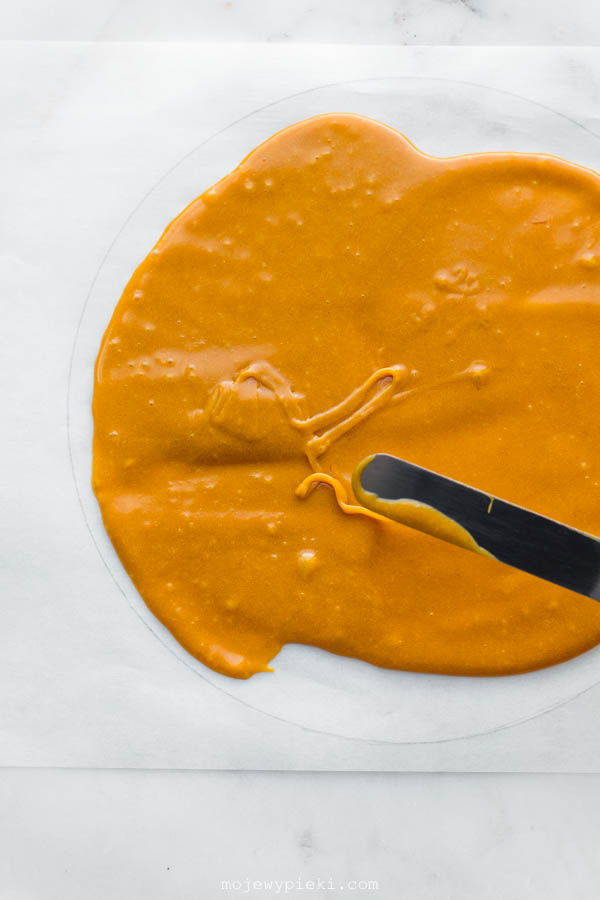
Bake the honey layers at 180°C for approximately 6–7 minutes (no longer, otherwise the layers will become hard), baking two trays at once on different oven shelves. Remove from the oven and leave to cool. Repeat with the remaining batter until you have 11 layers in total.
Crumble one of the cooled layers (the quickest way is to use a food processor). Set the crumbs aside to decorate the Medovik.
Ingredients for the dulce de leche cream:
- 400 g dulce de leche, chilled
- 115 g honey
- a large pinch of salt
- 1.15 litres double cream, chilled
Place the dulce de leche, honey and salt in the bowl of a stand mixer and beat until combined. Add 150 ml of the double cream and beat until combined. Refrigerate for about 30 minutes.
Pour the remaining 1 litre of double cream into a large mixing bowl and whip. Add the chilled dulce de leche mixture and whip until you have a thick, firm cream, taking care not to overwhip it or the cream may split.
Assembly:
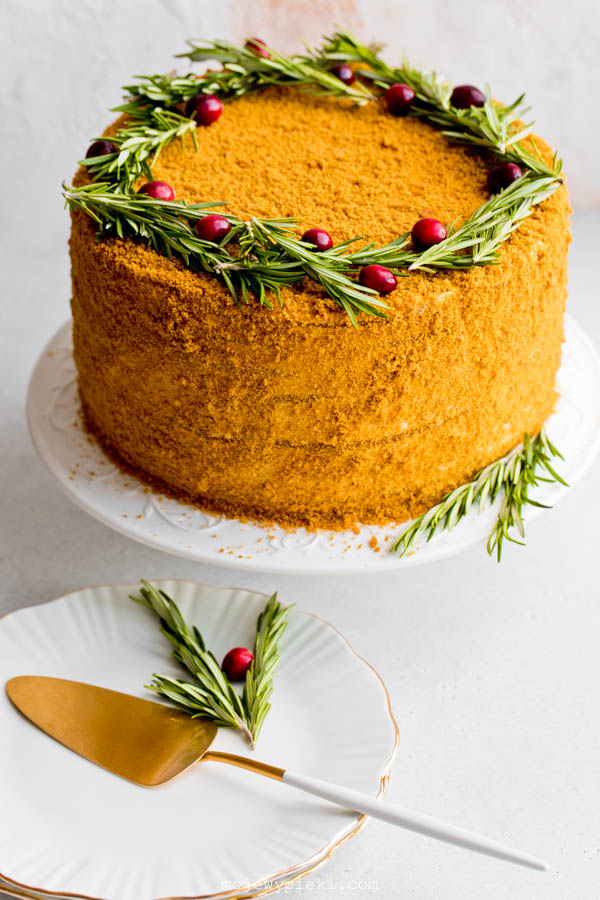
Place the cooled layers one on top of another, spreading cream between each layer (approximately 150 g of dulce de leche cream per layer). Once all the layers have been assembled, cover the top and sides of the cake with the remaining cream and smooth the surface. Coat the sides and top with the reserved cake crumbs. Decorate the top as desired; I used fresh rosemary and cranberries. Refrigerate and serve the following day, after chilling for several hours.
Store the Medovik in the refrigerator.
* The amount of sugar in the cake layers can be reduced without affecting the consistency of the batter.
Enjoy!
Recipe adapted from “Baking at the 20th Century Cafe” by Michelle Polzine.
I read all comments, but unfortunately I can't answer them all. Before posting a question, make sure nobody has asked a similar one (this will be facilitated by the search engine included in the comments). Comments with links may not be published.
Blog author